Grilling burgers is simple once you understand how heat, thickness, and doneness work together. Knowing how long to grill burgers is less about guessing minutes and more about matching time and temperature to the burger you want to eat.
- 1.Key factors that affect grilling time
- 2.Standard grilling times by doneness
- 3.How to use a thermometer for accuracy
- 4.How thickness changes the timing
- 5.Gas grill vs charcoal grill timing
- 6.Step-by-step process for well-timed burgers
- 7.Adjusting for frozen and specialty burgers
- 8.Recognizing doneness without a clock
Key factors that affect grilling time
The time a burger needs on the grill depends on a few predictable variables. The first is patty thickness. A thin diner-style patty can cook through in just a couple of minutes per side, while a thick, pub-style burger may need nearly twice as long. When you change thickness, you change how far heat has to travel from the grill grates to the center of the meat.
Grill temperature is the second major factor. Most burgers cook best over medium-high direct heat, which is roughly 375 to 450°F (190 to 230°C). If your grill is cooler than that, expect the times to stretch. If it is running hotter, your burgers will brown faster on the outside and need careful monitoring to avoid burning before the center is done.
Desired doneness is the third element. A burger cooked to medium will naturally take less time than one cooked to well done. Food safety guidelines recommend 160°F (71°C) internal temperature for ground beef, which is the well-done range. Many home grillers still choose medium or medium-well for a juicier texture, but understand that anything below 160°F carries additional risk.
Standard grilling times by doneness
For typical 1/2-inch to 3/4-inch thick beef patties over medium-high direct heat, you can rely on some general timing ranges. These times apply to fresh, not frozen, patties and assume you are grilling with the lid closed most of the time.
- Rare (about 120–125°F / 49–52°C): roughly 2–3 minutes per side
- Medium-rare (about 130–135°F / 54–57°C): roughly 3–4 minutes per side
- Medium (about 140–145°F / 60–63°C): roughly 4–5 minutes per side
- Medium-well (about 150–155°F / 66–68°C): roughly 5–6 minutes per side
- Well done (about 160°F+ / 71°C+): roughly 6–7 minutes per side
Use these ranges as a starting point rather than a guarantee. A windy day, an older grill, or a thicker patty will all shift these numbers slightly. Visual cues help: deeper browning, a firmer feel, and juices that run clearer all indicate a more cooked burger.
How to use a thermometer for accuracy
Relying only on time can lead to overcooked or undercooked burgers. A quick-read digital thermometer removes the guesswork and lets you grill to a precise internal temperature. Insert the probe into the side of the patty rather than directly down from the top. This helps you reach the true center without touching the grates, which can give a false high reading.
Check the temperature a minute or two before you think the burger is done. If your goal is 160°F, start checking at around 150°F. Burgers will usually rise a couple of degrees after coming off the grill, known as carryover cooking. Pulling them off just shy of your target helps prevent dryness.
How thickness changes the timing
Thin patties cook quickly and can go from perfect to overdone in less than a minute. These are ideal when you want a crisp, browned exterior and are fine with a well-done interior. Because they are so thin, grilling times can be as short as 1–2 minutes per side over high heat. Watch them closely and be ready to flip and pull them fast.
Thicker patties, around 3/4 inch to 1 inch, need more time and a slightly more controlled heat. If you blast them with very high heat, you risk burning the outside before the center cooks through. For these, keep the grill in the medium-high range, expect 8–12 minutes total cook time, and consider using a two-zone setup so you can move them to indirect heat if they brown too fast.
A useful habit is to press a shallow dimple into the center of each patty with your thumb before grilling. This helps them cook more evenly and reduces the tendency to puff up into a ball, which can affect both cooking time and texture.
Gas grill vs charcoal grill timing
Gas grills make it easier to repeat the same heat level every time, which can make your grilling times more predictable. Preheat the grill for at least 10–15 minutes on medium-high, clean the grates, and oil them lightly. Once you know how your particular gas grill behaves, your timing for a given thickness and doneness will become very consistent.
Charcoal grills can run hotter and fluctuate more as the coals burn down. Let the coals ash over before you start, then spread them in an even layer to create a stable heat zone. If they are glowing extremely hot and you cannot comfortably hold your hand above the grate for more than a second or two, assume your burgers will cook faster than standard times and adjust by turning and checking them earlier.
On both types of grills, a two-zone fire gives you more control. One side is hotter for searing, and the other is cooler for finishing thicker burgers without burning. You can sear for a couple of minutes per side over the hot zone, then slide the patties to the cooler side and close the lid to gently bring them up to your target temperature.
Step-by-step process for well-timed burgers
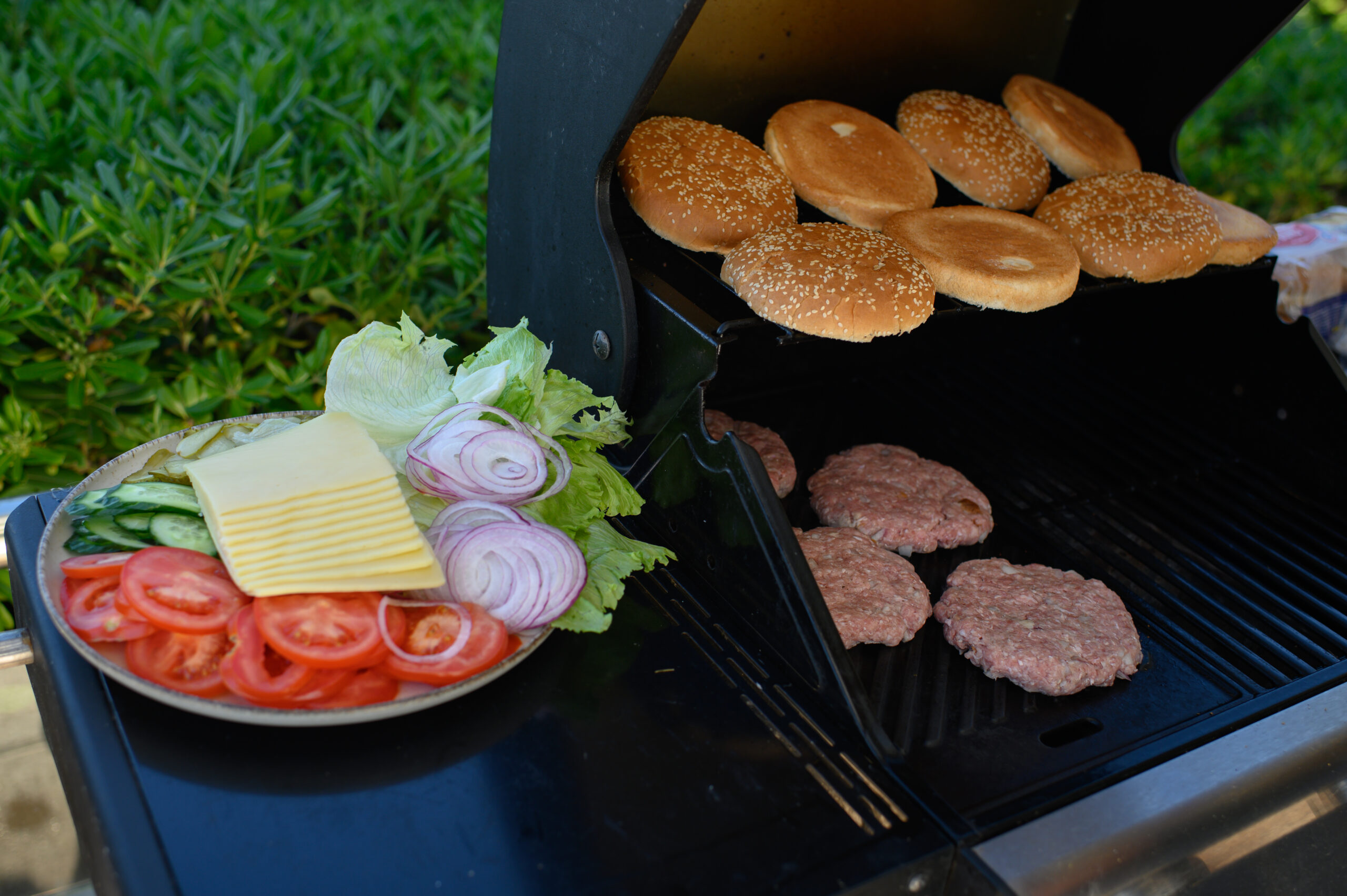
Start by forming your patties to a consistent thickness so they cook at the same rate. Keep them slightly larger than your buns, since they will shrink on the grill, and make that small dimple in the center. Season just before grilling with salt and pepper or your preferred seasoning blend.
Preheat the grill to medium-high and clean the grates. Lightly oil the grates or brush a small amount of oil on the patties to prevent sticking. Place the burgers directly over the heat and close the lid. Resist the temptation to move them constantly. Let the first side cook undisturbed until you see good browning at the edges and juices beginning to rise to the top, then flip once.
After flipping, use the time guidelines as a reference, but rely on the thermometer for the final call. When the burgers are a few degrees below your target, you can add cheese if you want it melted, close the lid for another 30–60 seconds, then pull them off onto a clean plate to rest for a couple of minutes before serving.
Adjusting for frozen and specialty burgers
If you are grilling frozen store-bought patties, plan on extra time. You can place them on the grill frozen, but expect the total cook time to increase by several minutes. Grill them over medium rather than high heat so the outside does not overcook before the interior thaws and reaches a safe temperature. Check internal temperature carefully, since visual cues are less reliable with frozen patties.
Turkey, chicken, and plant-based burgers follow the same general timing principles, but their safe internal temperatures differ. Poultry burgers should reach 165°F (74°C), which often means they take slightly longer than beef for the same thickness. Many plant-based burgers are designed to cook quickly, so check the package instructions and understand that they may brown much faster than meat, requiring closer attention to avoid overcooking.
Recognizing doneness without a clock
With practice, you can rely less on the clock and more on what you see and feel. A rare burger will feel very soft and springy if you press it lightly with tongs. As burgers move from medium to well done, they become firmer and offer more resistance. The color of the juices is another clue, with redder juices indicating a less-cooked interior and clearer juices pointing to a more well-done burger.
Even when you develop this intuition, it is still wise to double-check with a thermometer, especially when cooking for guests or anyone who may be vulnerable to foodborne illness. Over time, you will be able to match what you feel and see with the temperatures you measure, and your sense of how long to grill burgers on your particular setup will become very reliable.