Baking salmon at 400°F is one of the most reliable ways to get tender, flaky fish with a lightly crisped exterior. The right baking time depends mainly on the thickness of your fillet or portion, plus whether it is wild or farmed. With a few simple checks, you can hit the perfect doneness consistently.
- 1.How long to bake salmon at 400°F
- 2.Time guidelines by cut and thickness
- 3.Using internal temperature for accuracy
- 4.Visual signs your salmon is done
- 5.Differences between wild and farmed salmon
- 6.How to prepare salmon for baking at 400°F
- 7.Basic method for baking salmon at 400°F
- 8.Adjusting time for different conditions
- 9.Resting and serving
- 10.FAQ
How long to bake salmon at 400°F
As a practical rule, most salmon fillets baked at 400°F will be done in about 10 to 15 minutes. Thinner pieces may be ready in as little as 8 minutes, while very thick center-cut fillets can take up to 18 minutes. Instead of relying on the clock alone, combine time with visual cues and, ideally, a thermometer.
For average, single-serving fillets that are about 1 inch thick at the thickest point, plan on 12 minutes at 400°F. Start checking around 10 minutes to avoid overcooking. If you are baking multiple portions on the same tray, use the thickest piece as your reference, since thinner edges will naturally cook a bit faster.
Time guidelines by cut and thickness
Thickness is more important than total weight when you are deciding how long to bake salmon at 400°F. A long, flat tail piece will cook faster than a compact, thick center cut, even if both weigh the same. Measure the thickest part of the fillet or portion and time from there.
Standard fillets
For most home kitchens, skin-on or skinless fillets around 1 inch thick are the most common. At 400°F, these generally need 10 to 14 minutes. A good approach is to place the seasoned salmon on a lined baking sheet, set a timer for 10 minutes, and then check for doneness every 2 minutes after that until the center is just opaque and flakes when gently pressed.
If your fillets are noticeably thinner, closer to 3/4 inch or less, expect them to cook faster, often in 8 to 10 minutes. For thicker fillets that are 1 1/4 inches or more, you may need 14 to 18 minutes, depending on your oven and how cold the fish was when it went in.
Whole sides of salmon
A whole side of salmon, often sold as a large, single piece, takes longer simply because of its overall size and uneven thickness. At 400°F, most sides will take 15 to 20 minutes. The tail end may be done earlier, while the thick center still needs a few extra minutes, so check in more than one spot.
If presentation matters and you want the entire side to be just barely cooked through, remove it as soon as the thickest part reaches 125°F to 130°F and tent it loosely with foil. Carryover heat will finish the cooking, and the thinner parts will stay moist instead of drying out.
Portion cuts and steaks
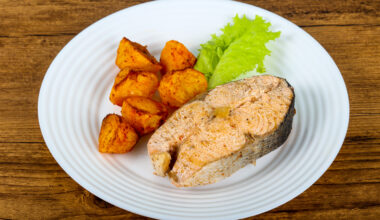
Pre-cut portions and salmon steaks are often thicker and more compact. At 400°F, these usually take 12 to 16 minutes. Steaks with bones may cook slightly more slowly near the center, so confirm doneness with a thermometer inserted horizontally into the thickest part, away from the bone, for the most accurate reading.
Using internal temperature for accuracy
The most dependable way to know how long to bake salmon at 400°F is to cook until it reaches the right internal temperature rather than relying on time alone. Ovens vary, and salmon can go from perfectly cooked to dry surprisingly quickly.
For most people, the ideal internal temperature for baked salmon is around 125°F to 130°F in the center for moist, tender, slightly silky flesh. If you prefer it more fully cooked and flaky throughout, 135°F to 140°F will give you a firmer texture without making it chalky. Insert an instant-read thermometer into the thickest part of the fillet, avoiding bones and the baking sheet, and check a couple of minutes before you think it will be done.
Visual signs your salmon is done
If you do not have a thermometer, pay attention to how the salmon looks and feels. Properly baked salmon at 400°F should lose its translucent, raw appearance and turn opaque pink or coral all the way through, but still look moist on the surface rather than dry or fibrous.
Gently press the top of the fillet with a fork or your finger. If the layers of flesh separate into flakes easily, it is done. If it still feels dense and resists flaking, it needs a bit more time. Be conservative with extra time and check frequently, especially during the last few minutes, because residual heat continues to cook the fish after you remove it from the oven.
Differences between wild and farmed salmon
Whether your salmon is wild or farmed also affects how long it needs in a 400°F oven. Wild salmon is typically leaner and can dry out if baked too long, so it benefits from slightly shorter cooking times and careful monitoring, especially for thinner fillets such as sockeye or coho.
Farmed salmon, including common Atlantic varieties, tends to be thicker and higher in fat. This extra fat gives you a slightly wider margin of error, but it still overcooks if left too long. For a typical farmed fillet, plan around 12 to 15 minutes at 400°F and aim for the lower end of the internal temperature range if you want a softer, juicier texture.
How to prepare salmon for baking at 400°F
Good preparation helps ensure your timing at 400°F is accurate. For even cooking, start with salmon that is close to room temperature. Take it out of the refrigerator about 15 to 20 minutes before baking so the center is not ice-cold. Very cold fish can require a few extra minutes in the oven, which increases the risk of overcooking the thinner edges.
Pat the surface dry with paper towels before seasoning. Moisture on the surface can create steam, which limits browning and may change how the heat penetrates. Lightly oil the fish and the baking surface to prevent sticking and promote even cooking. Skin-on salmon should usually be baked skin-side down, which protects the flesh from direct heat and helps it stay moist, especially at a relatively hot 400°F.
Basic method for baking salmon at 400°F
A straightforward method works well for most fillets. Preheat your oven fully to 400°F. Line a baking sheet with parchment paper or lightly greased foil. Place the salmon on the tray, skin-side down if it has skin, and season with salt, pepper, and any herbs or citrus you like. Slide the tray into the center of the oven, not too close to the top or bottom elements, for even heat.
For an average 1-inch fillet, start checking for doneness at around 10 minutes. Look for opaque flesh and easy flaking, or use a thermometer to check that the thickest part is at 125°F to 130°F. Once it reaches your preferred level of doneness, remove the tray from the oven and let the salmon rest for about 3 minutes before serving to allow juices to redistribute.
Adjusting time for different conditions
Several small variables can shift how long you need to bake salmon at 400°F. A very crowded baking sheet can slow cooking slightly, while using a darker metal tray can make the bottom cook faster. If you place the salmon in a glass baking dish rather than on a flat sheet, the fish may take a couple of extra minutes because the sides of the dish retain heat differently.
If you cover the salmon with foil to keep it extra moist, expect a small increase in cooking time, since the steam inside the packet moderates direct heat from the oven. In this case, open the foil toward the end of cooking if you want a bit of color on the surface. Conversely, baking very close to the top element or combining baking with a brief broil will reduce the needed time, so monitor closely to avoid overcooking.
Resting and serving
Allowing baked salmon to rest briefly after it comes out of the 400°F oven is a small step that improves both texture and juiciness. The internal temperature can rise by several degrees as it sits, especially in thicker cuts. If you prefer your salmon on the medium side, you can remove it when the thermometer reads a couple of degrees below your target and let carryover heat finish the job.
During this short rest, keep the fish loosely tented with foil if your kitchen is cool or if the fillets are on the thinner side. Serve promptly afterward, since salmon continues to firm up as it cools and is best enjoyed while still warm and moist.
FAQ
Is 400°F a good temperature for baking salmon?
Yes, 400°F is a reliable temperature for baking salmon because it cooks the fish quickly enough to keep it moist while allowing the surface to firm up and take on light color. It also keeps total cooking time in a manageable 10 to 15 minute range for most fillets.
Can I bake frozen salmon at 400°F?
You can bake frozen salmon at 400°F, but it will take longer, often 20 to 25 minutes depending on thickness. For more consistent results, it is better to thaw the salmon in the refrigerator first so you can use standard cooking times and avoid overcooking the outer layers.
Should I cover salmon when baking at 400°F?
You do not need to cover salmon when baking at 400°F, and leaving it uncovered helps the surface firm up slightly. If your fillet is very lean or particularly thin, covering loosely with foil for part of the time can help prevent drying, but check frequently toward the end.