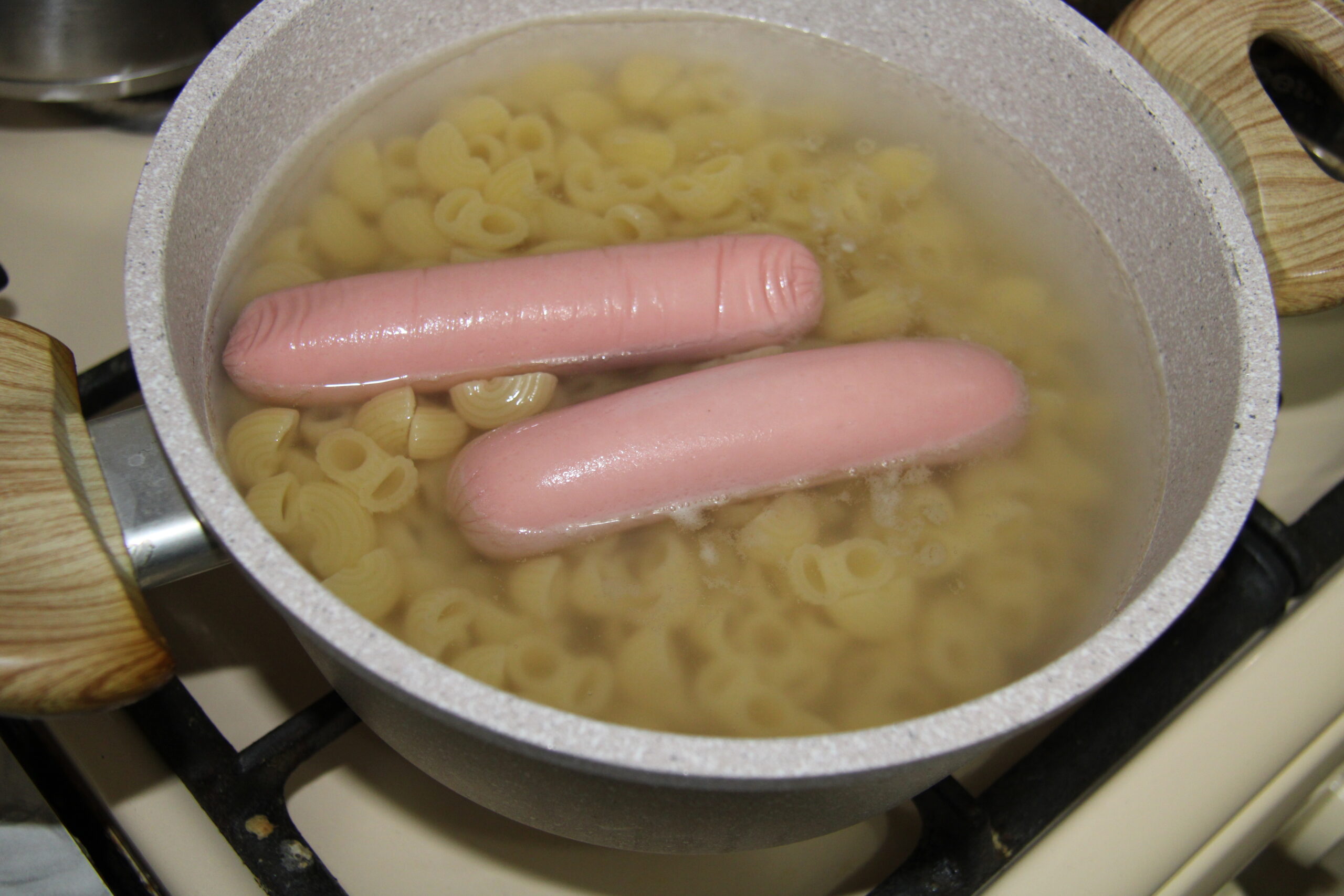
Knowing exactly how long to boil hot dogs helps you get a juicy, evenly heated result instead of split, rubbery sausages. The right timing depends on whether your hot dogs are frozen or thawed, their size, and how many you are cooking at once.
How long to boil hot dogs
For standard beef or pork hot dogs that are already fully cooked, boiling is about heating them through and improving texture rather than cooking from raw. In most home kitchens, a good guideline is 4 to 6 minutes in gently boiling water for refrigerated hot dogs, and 8 to 10 minutes for frozen hot dogs added directly from the freezer.
If you are boiling a single hot dog or two in a small pot, you will usually be closer to the lower end of the range. When the pot is crowded with several hot dogs, or you are using very thick or jumbo dogs, lean toward the upper end. The key is to give the water time to return to a steady boil after you add the hot dogs and then keep it at a light, rolling boil rather than a violent one, which can make the casings split prematurely.
Step-by-step boiling method
Start by filling a medium pot with enough water to fully submerge the hot dogs, leaving room at the top so the water does not boil over. Bring the water to a full, rolling boil over medium-high heat before adding the hot dogs. Adding them too early, while the water is still heating, often leads to uneven heating and mushier texture.
Once the water is boiling, carefully place the hot dogs in the pot. As soon as they go in, the water temperature will drop slightly. Allow it to return to a gentle boil, then start timing. For refrigerated standard hot dogs, 4 to 6 minutes is typically enough; for frozen, 8 to 10 minutes is safer. You do not need to cover the pot, but partially covering can help the water return to a boil faster if you are cooking a large batch.
When the time is up, remove one hot dog and check for doneness. It should be hot all the way through, with a plump appearance and a slightly firmer texture. If the middle feels only lukewarm, return it to the water for another minute or two. Once you are satisfied, lift the hot dogs out with tongs and place them directly into buns or on a plate lined with a paper towel to remove excess surface water.
Timing for different types of hot dogs
Standard and jumbo hot dogs
Most packaged hot dogs sold in supermarkets are fully cooked and only need reheating. For regular-size hot dogs straight from the fridge, 4 to 6 minutes in boiling water is usually ideal. For jumbo or extra-thick hot dogs, plan on 7 to 8 minutes so that the center is as hot as the outside. If you prefer a very firm texture, you can leave them in for an extra minute, but avoid prolonged boiling, which can cause the casing to burst and the meat to become rubbery.
Frozen hot dogs
If you do not have time to thaw hot dogs, you can boil them directly from frozen. Add frozen hot dogs to already boiling water and allow the water to return to a boil before starting your timer. In most cases, 8 to 10 minutes is enough for standard-size dogs, and 10 to 12 minutes for jumbo ones. If you are boiling a large number of frozen hot dogs together, test one by cutting it in half after 10 minutes to confirm that the center is fully hot before removing the rest.
Natural casing and specialty hot dogs
Natural casing hot dogs tend to have a snappier bite but can split more easily. Boil these gently, on a slightly lower heat, for about 5 to 7 minutes from refrigerated and 9 to 11 minutes from frozen. Avoid a hard boil, which can tear the casing and cause flavor loss into the water. For specialty sausages that are not pre-cooked, such as some fresh bratwurst or artisan hot dogs, always follow the producer’s instructions, as these may need longer poaching or pre-cooking to reach a safe internal temperature.
How to tell when hot dogs are done
Because commercial hot dogs are pre-cooked, “done” is about temperature and texture rather than food safety in most cases. A properly boiled hot dog should look plump, with a uniform color and no cold spots when you bite into it. If you have a food thermometer and want to be precise, aim for an internal temperature of at least 165°F (74°C) in the center, especially if you are serving children, older adults, or anyone with a weakened immune system.
Signs that you have gone too far include casings that have split widely, very wrinkled skin, and a tough or rubbery bite. If this happens, shorten your boiling time by a minute or two next time or reduce the intensity of the boil so the hot dogs heat more gently.
Improving flavor and texture
Boiling in plain water works, but you can improve flavor and texture with a few small adjustments. Lightly salting the water or adding a splash of stock can make the surface seasoning more balanced. Some cooks add aromatics like a piece of onion or a bay leaf, which subtly perfumes the hot dogs without overpowering them. These additions do not change how long you should boil the hot dogs, but they can make the result taste less bland.
If you like a bit of browning as well as the even heat of boiling, you can combine methods. Boil the hot dogs for the standard time to heat them through, then finish them in a hot skillet or on a grill for 1 to 2 minutes per side to add color and a slight char. This approach is useful when you are cooking for a crowd, because it lets you pre-boil several hot dogs and then quickly finish them to order without worrying whether the centers are hot.
Safety and storage tips
Even though hot dogs are usually pre-cooked, they should be handled like any other perishable food. Keep unopened packages refrigerated and pay attention to the “use by” date on the label. Once opened, store any unused hot dogs in an airtight container or tightly wrapped, and try to use them within a week. If you have leftover boiled hot dogs, refrigerate them within two hours of cooking and reheat them in simmering water for 2 to 3 minutes, or until steaming hot throughout.
For anyone at higher risk of foodborne illness, it is especially important that hot dogs are heated thoroughly to a safe temperature each time they are served. Boiling within the time ranges described, combined with checking that the hot dogs are piping hot in the middle, is a simple way to stay on the safe side without overcooking.