Aligning the 3rd mirror on a laser cutter or engraver is one of the most important steps in getting consistent, accurate cuts. Done correctly, it ensures the beam hits the lens cleanly and stays aligned across the entire work area. This guide walks you through a practical, methodical way to align the 3rd mirror safely and accurately.
- 1.Understand the role of the 3rd mirror
- 2.Prepare the machine before aligning
- 3.Set up for 3rd mirror test shots
- 4.Use low-power test firing
- 5.Check beam position at different corners
- 6.Interpret the burn marks
- 7.Adjust the 3rd mirror screws
- 8.Align for consistency across the bed
- 9.Fine-tune around the nozzle and lens
- 10.Test the alignment with real cuts
- 11.Maintain stable 3rd mirror alignment
- 12.FAQ
Understand the role of the 3rd mirror
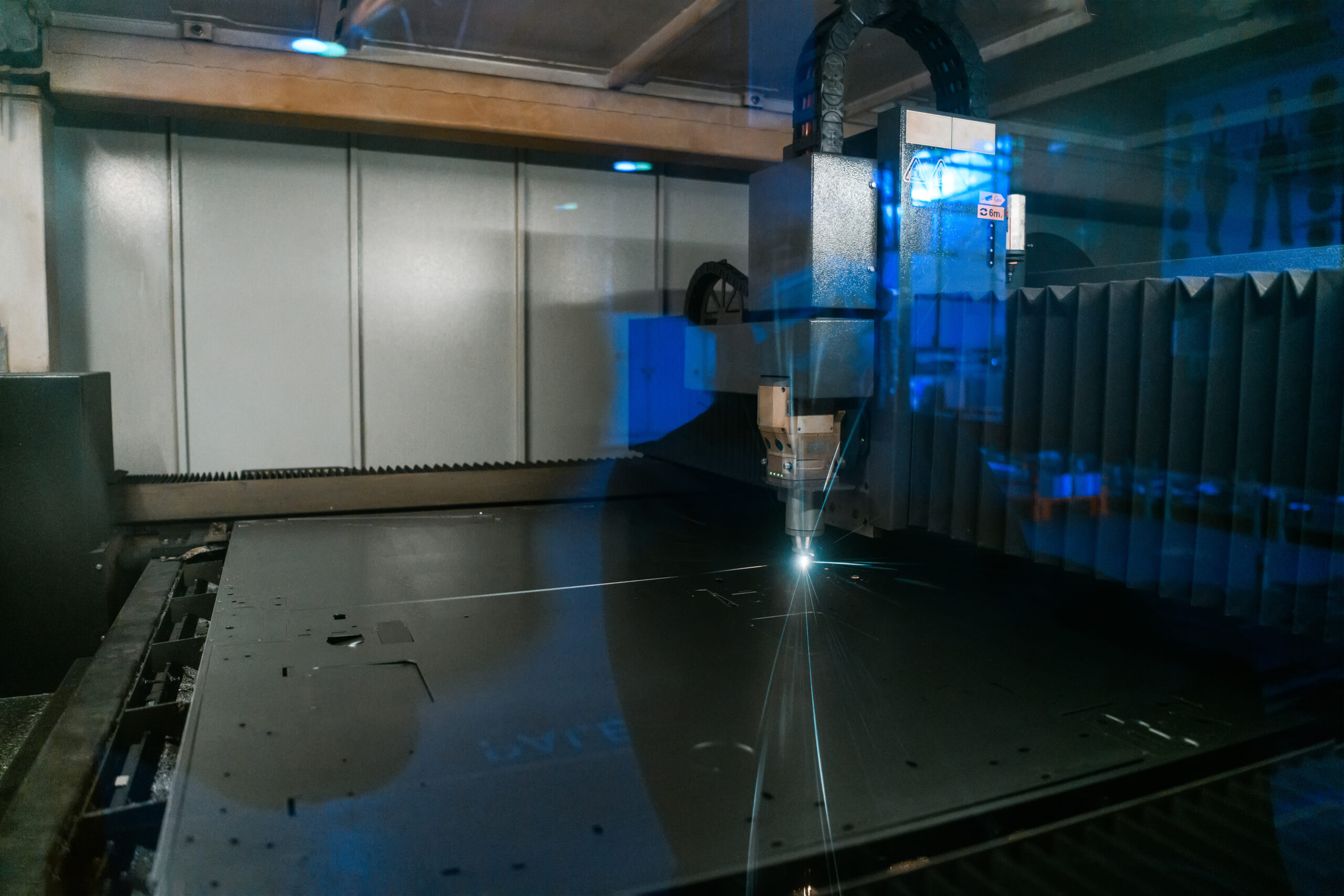
On most CO₂ laser cutters, the 3rd mirror is the last mirror before the laser beam enters the focusing head and passes through the lens. Mirrors 1 and 2 guide the beam along the X and Y axes, while the 3rd mirror fine-tunes the beam’s final approach into the nozzle. If this mirror is misaligned, you will see inconsistent cutting power across the bed, tapered cuts, or the beam clipping the edge of the nozzle.
Before you start adjustments, confirm that your 1st and 2nd mirrors are already aligned. The 3rd mirror should be treated as the final step in the optical alignment process, not the starting point. Aligning it while the earlier mirrors are off will only lead to frustration and confusing results.
Prepare the machine before aligning
Preparation is essential for safe and accurate 3rd mirror alignment. Start by turning the machine off completely and letting any high-voltage components discharge. Check that the work area is clean and well lit so you can see the burn marks clearly. Make sure you have easy access to the laser head, the 3rd mirror mount, and the movement controls of the gantry.
Gather what you need beforehand so you are not improvising mid-process. Typically you will need small strips of masking tape or painter’s tape, a non-permanent marker or fine pen, an appropriately sized hex key or screwdriver for your 3rd mirror mount, and a piece of scrap material for test cuts later. Protective eyewear suitable for your laser wavelength is strongly recommended whenever you are running test fires, even at low power.
Set up for 3rd mirror test shots
The goal of test shots is to see exactly where the beam hits after reflecting off the 3rd mirror. To do this, you need to temporarily block the nozzle opening with tape so the beam leaves a visible mark. Move the laser head to a convenient position on the bed, usually near the front left so you can see what you are doing. Lower the bed or adjust Z height enough that the head can move freely without hitting your work material.
Cover the underside of the nozzle opening or the entrance to the 3rd mirror housing with a piece of masking tape. You want the tape to sit flat and tight, not loose or wrinkled, so the burn mark is clean and easy to interpret. If your machine’s design places the 3rd mirror inside the head assembly, follow the manufacturer’s recommendation for where to place tape to capture the beam position.
Use low-power test firing
For alignment, always work with low laser power and very short pulses. Set your laser to the lowest power level that will still leave a visible mark on the tape. Too much power can burn through the tape, char surrounding material, or make the mark too large to read precisely. Many users find that short manual “pulse” or “test” buttons on the control panel work well for this step.
With the tape in place and safety checks done, close the lid if your machine requires it and perform a single short pulse. Avoid holding the test button for more than a fraction of a second. When you remove the tape, you should see a small circular burn or darkened spot. This shows you exactly where the beam is intersecting the nozzle path after passing the 3rd mirror.
Check beam position at different corners
The 3rd mirror has to be aligned so that the beam hits the same relative spot on the nozzle or lens entrance when the head is at any point on the bed. To verify this, you repeat the tape and pulse process at several positions. Start with one position, such as the front-left corner of the working area, then move to the front-right, back-right, and back-left corners, or at least two diagonally opposite positions if your time is limited.
For each position, place fresh tape over the nozzle opening, pulse once, and then label the tape with the position (for example “FL” for front left, “BR” for back right). Comparing these marks lets you see whether the beam is drifting relative to the nozzle opening as the head moves. Ideally, all marks should be centered or consistently in the same place, not shifted to one side or another.
Interpret the burn marks
Reading the burn patterns correctly is the key to efficient adjustment. If the marks from all corners are in roughly the same position but off-center in the nozzle opening, the 3rd mirror itself needs a uniform adjustment to move the beam toward the center. If the marks shift position between corners, that indicates the beam is entering the 3rd mirror at an angle or the mirror is not square to the motion, which requires finer adjustment of the mirror screws.
A common pattern is that marks at the front of the bed are centered, while the marks at the back are high, low, left, or right. This suggests that as the head moves, the beam path is no longer aligned with the mechanical travel. In this situation, you adjust the 3rd mirror mount to make the burn marks from different positions converge toward the same point. Taking photos or lining the pieces of tape up next to each other can help you see these shifts more clearly.
Adjust the 3rd mirror screws
The 3rd mirror mount usually has three or sometimes two adjustment screws. Turning these screws slightly tilts the mirror and changes the direction of the reflected beam. Before you start, note the current screw positions so you have a reference. It is often helpful to work in very small increments, such as a quarter turn or less, and to adjust only one screw at a time so you can see the effect.
A practical way to think about adjustments is that tilting the mirror one way moves the burn mark in the opposite direction. For example, if your burn mark appears low on the tape, you generally need to tilt the mirror so the beam is reflected slightly upward, which may involve turning the top screw in or out depending on your mount. Make a small adjustment, put on fresh tape, pulse again at the same bed position, and compare the new mark to the previous one.
Align for consistency across the bed
Once you can center the beam at one position, the next goal is to keep it centered at all key positions on the bed. Work in a loop: choose two diagonally opposite positions, such as front-left and back-right, and alternate between them. After a small mirror adjustment, check the burn at one position, then move the head and check the other. The ideal outcome is that both marks line up in the center of the nozzle or lens entrance.
If you find that centering one position throws the other off, focus on bringing both marks closer together rather than perfecting just one. It is often better to have both positions slightly off-center in the same direction than to have one perfect and one far out. Once the diagonal positions match fairly well, repeat the process on the remaining corners or at the middle of the bed to confirm that the alignment holds everywhere you plan to cut.
Fine-tune around the nozzle and lens
After you are satisfied with the burn marks on tape, look at how the beam is entering the lens assembly itself. On some machines, you can remove the lens tube and place tape above and below the lens position to confirm that the beam passes cleanly through the center. Be sure the machine is powered down and the lens is removed or protected before doing this to avoid damage.
If the beam is clipping the edge of the nozzle or lens holder, you may need very small final adjustments or to check for mechanical issues, such as a bent mount or a head that is not square to the gantry. At this stage, changes should be extremely minor. Once the beam passes through the center consistently, tighten all adjustment screws gently but firmly so the mirror will not move from vibration during normal use.
Test the alignment with real cuts
The final step is to verify alignment in actual cutting and engraving. Replace any removed components, clean the 3rd mirror and lens carefully if they have collected soot from alignment tests, and restore your usual cutting focus height. Use a flat piece of scrap material such as plywood or acrylic that covers a good portion of the work area.
Run simple test patterns in different areas of the bed, such as small squares or circles in each corner and at the center. Check whether the kerf width, cutting depth, and engraving sharpness look consistent across all positions. If you see a noticeable drop in power or a change in cut angle in one region, it may indicate the 3rd mirror alignment still needs a minor refinement, or that earlier mirrors should be revisited.
Maintain stable 3rd mirror alignment
Once aligned, the 3rd mirror should stay in place for a long time if the machine is not bumped or moved. However, vibration, accidental knocks, or transport can cause small shifts. It is good practice to perform a quick tape test at the nozzle whenever you notice unusual cutting behavior, such as edges that are no longer square or a sudden change in cutting power on one side of the bed.
To reduce how often you need to realign, avoid overtightening the adjustment screws, keep the mirror mounts and head assembly clean from debris, and do not use the mirror housing as a handle when moving the gantry manually. Periodic checks, especially after maintenance or moving the machine, help catch minor alignment issues before they affect production work.
FAQ
How often should I realign the 3rd mirror?
You should check 3rd mirror alignment whenever you notice inconsistent cutting across the bed, after moving the machine, or after any impact to the gantry or head. Many users find that a full realignment is only needed occasionally if the machine is stable and undisturbed.
Can I align the 3rd mirror without touching mirrors 1 and 2?
You can, but it is not ideal. The 3rd mirror should be aligned after mirrors 1 and 2 are already correct. If the upstream mirrors are off, you may be compensating for a bad beam path instead of achieving a true alignment.
What power level should I use for test firing?
Use the lowest power that leaves a clear mark on masking tape, typically just a few percent of your machine’s maximum. Combine this with very short pulses to avoid burning through the tape or damaging components.
What if the beam never seems to center in all corners?
If you cannot get consistent marks across the bed, check for mechanical issues such as loose mirror mounts, a twisted gantry, or misaligned rails. Persistent inconsistency often indicates a physical problem rather than just mirror settings.