Knowing how often to change the air filter in your car is a simple way to protect your engine, improve fuel economy, and keep your vehicle running smoothly. With a few practical checks and a clear schedule, you can stay ahead of problems and avoid unnecessary repairs.
How often to change a car air filter
Most manufacturers recommend changing the engine air filter every 12,000 to 15,000 miles (about 19,000 to 24,000 km) or roughly once a year, whichever comes first. This is a general range, not a strict rule. The right interval for your car depends on your driving conditions, mileage, and the specific recommendations in your owner’s manual.
If you do a lot of city driving with stop-and-go traffic, drive on dusty roads, or live in an area with heavy pollution or pollen, you may need to replace the filter more often, sometimes every 8,000 to 10,000 miles. For mostly highway driving in clean conditions, you may be able to safely stretch closer to the upper end of the range, provided the filter still looks clean and your car shows no performance issues.
Check your owner’s manual first
The most reliable guidance for how often to change the air filter in your car is in the maintenance schedule of your owner’s manual. Manufacturers test their engines under specific conditions and set intervals that balance performance, efficiency, and protection.
Look for the maintenance section and find “engine air filter,” “air cleaner,” or similar wording. Some manuals show two schedules: one for normal driving and one for severe conditions. If you frequently drive in dust, extreme temperatures, or heavy traffic, follow the severe schedule, even if it means more frequent changes than you expected.
Signs your car air filter needs changing
You do not have to wait for the exact mileage interval if your car shows signs that the air filter is clogged. A visual and performance check can help you decide if it is time to replace it earlier than the manual suggests.
Visual inspection
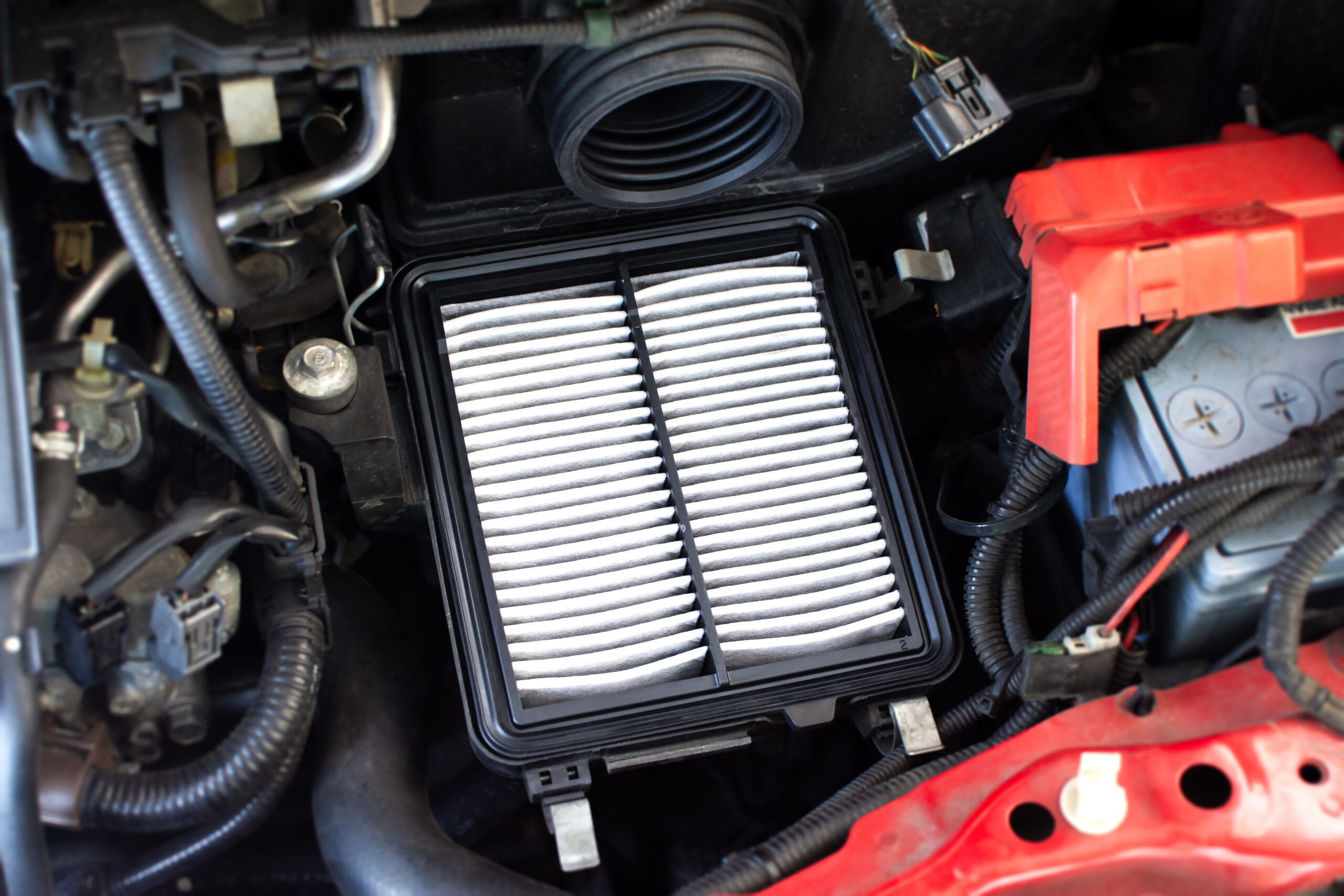
The most direct way to judge the condition of your engine air filter is to inspect it. After locating the air filter housing (usually a plastic box near the front or side of the engine bay), open it carefully and remove the filter. In good light, look at both sides of the filter material. A slightly gray or off-white color is normal with use. Heavy darkening, thick dust, leaves, sand, or visible debris packed in the pleats indicate it is due for replacement.
You can gently tap the filter to see how much dust falls out, but do not use compressed air or vigorous shaking to try to “restore” it. That can damage the filter media and force particles deeper into it. If the filter looks very dirty or you cannot see light through the material when held up, replace it instead of trying to clean it.
Performance and fuel economy changes
A clogged engine air filter restricts airflow and can affect how the engine runs. If you notice sluggish acceleration, especially when merging or climbing hills, or your car feels like it struggles to breathe at higher speeds, the air filter is one of the first things to check.
Another subtle sign is a gradual drop in fuel economy. While many factors influence fuel use, a dirty air filter can cause the engine control system to adjust the fuel mixture in ways that reduce efficiency. If you see a clear, sustained drop compared with your usual consumption and nothing else has changed, inspect the filter as part of your troubleshooting.
Unusual engine sounds or air intake noise
In some vehicles, a heavily restricted filter can alter the sound of the engine or intake. You might hear a slightly rougher idle, minor hesitation, or a muted intake sound compared with how the car usually sounds under acceleration. These changes alone are not a diagnosis, but combined with a dirty filter on inspection, they are a good reason to replace it.
Adjusting intervals for real-world conditions
The official maintenance schedule is a starting point, but real-world use often calls for adjustments. The more airborne dust, sand, pollen, or pollution the filter needs to trap, the faster it will load up and restrict airflow. Thinking about where and how you drive helps you choose a realistic replacement interval.
City driving and short trips
Frequent short trips in urban areas expose the filter to more stop-and-go traffic, brake dust, and pollution. The engine spends more time idling in traffic, drawing air from around other vehicles where fumes and particles are concentrated. In these conditions, inspecting the filter at least every 10,000 miles is sensible, even if your manual suggests a longer period. You may find that changing it slightly earlier keeps your car feeling more responsive.
Dusty, rural, or construction areas
If you regularly drive on gravel roads, near farms, or through construction zones, your filter will clog much more quickly. In these environments, it is common to change the engine air filter every 6,000 to 10,000 miles or even more often if it looks heavily loaded at inspection. Keeping a closer eye on it helps prevent fine dust from building up and affecting mass airflow sensors or settling in the intake system.
Seasonal and climate considerations
In areas with pronounced pollen seasons or frequent wildfires, airborne particles can rise sharply at certain times of year. Planning an extra filter check after peak pollen or smoke periods can be worthwhile. Similarly, if you live in a very hot region, your engine may run the cooling fans more often, pulling more air through the filter and shortening its effective life compared with a mild climate.
How to check and replace your engine air filter
Changing the engine air filter is one of the more straightforward maintenance tasks, and many owners can do it at home with basic tools. Even if you prefer to have a shop do the work, knowing what is involved helps you judge whether the filter truly needs replacement when it is recommended.
Locate and inspect the filter
Consult your owner’s manual or a service guide to find the air filter housing. It is typically a rectangular or square plastic box connected to a large intake hose. Before opening it, note how it is secured. Some housings use metal clips, while others use screws or plastic tabs that need gentle handling to avoid damage.
Once open, lift the old filter straight out, paying attention to how it sits in the housing. Look for arrows or markings that show airflow direction or orientation. Inspect the inside of the housing as well. Light dust is normal, but if you see leaves, sand, or debris, carefully wipe or vacuum around the edges without pushing dirt deeper into the intake path.
Install the new filter correctly
Match the new filter to the old one in size and shape before installing it. If they do not match, you likely have the wrong part number. Place the new filter into the housing in the same orientation as the old one, making sure it sits flush on all sides with no gaps or folded corners. A poor seal can allow unfiltered air to bypass the element, which defeats the purpose of having a filter.
Close the housing carefully, aligning any tabs and tightening screws or reattaching clips evenly. Do not overtighten fasteners on plastic housings, as they can crack. Once everything is secured, check that no tools or loose parts remain in the engine bay and start the engine to confirm it idles normally.
Engine air filter vs. cabin air filter
Many drivers confuse the engine air filter with the cabin air filter, which conditions the air you breathe inside the car. Both are important, but they serve different purposes and often have different replacement intervals. The engine air filter protects the engine from dust and debris, while the cabin filter protects the occupants from pollen, dust, and other contaminants entering through the HVAC system.
Both filters need regular replacement, and both intervals are usually listed in the owner’s manual. Be sure you know which one your service advisor or DIY guide is referring to. If you are planning maintenance, it can be efficient to check or replace both around the same time, especially if you drive in heavy traffic or dusty environments.
Tracking your air filter changes
Keeping a simple record of when you change the air filter helps you avoid both neglect and unnecessary early replacements. Many drivers write the date and mileage on the filter housing with a permanent marker or keep a note in a maintenance log or smartphone app. This makes it easy to glance at your records when someone suggests a replacement and decide based on actual use rather than guesswork.
If you use different brands or upgrade to a higher-quality filter, note that as well. Some premium filters are designed for slightly longer service intervals, but they still need regular inspection. Your own observations of driving conditions and filter appearance should always guide whether you follow the maximum advertised interval or choose a shorter one.
FAQ
Is it bad to drive with a dirty engine air filter?
Driving with a dirty filter for a short time is unlikely to cause immediate damage, but over time it can reduce performance, hurt fuel economy, and increase the risk of contaminants reaching sensitive engine components. It is best to replace it once it shows clear signs of clogging.
Can I clean and reuse my car’s air filter?
Most standard paper engine air filters are not designed to be washed or blown out and reused. Cleaning them aggressively can damage the media and reduce filtration. Only specific reusable filters, clearly marketed as such, should be cleaned according to the manufacturer’s instructions.
Does a new air filter really improve gas mileage?
If your old filter was moderately to heavily clogged, installing a new one can help restore normal fuel economy and throttle response. If the old filter was still relatively clean, you may not notice a major change, but you are maintaining protection and performance over the long term.