
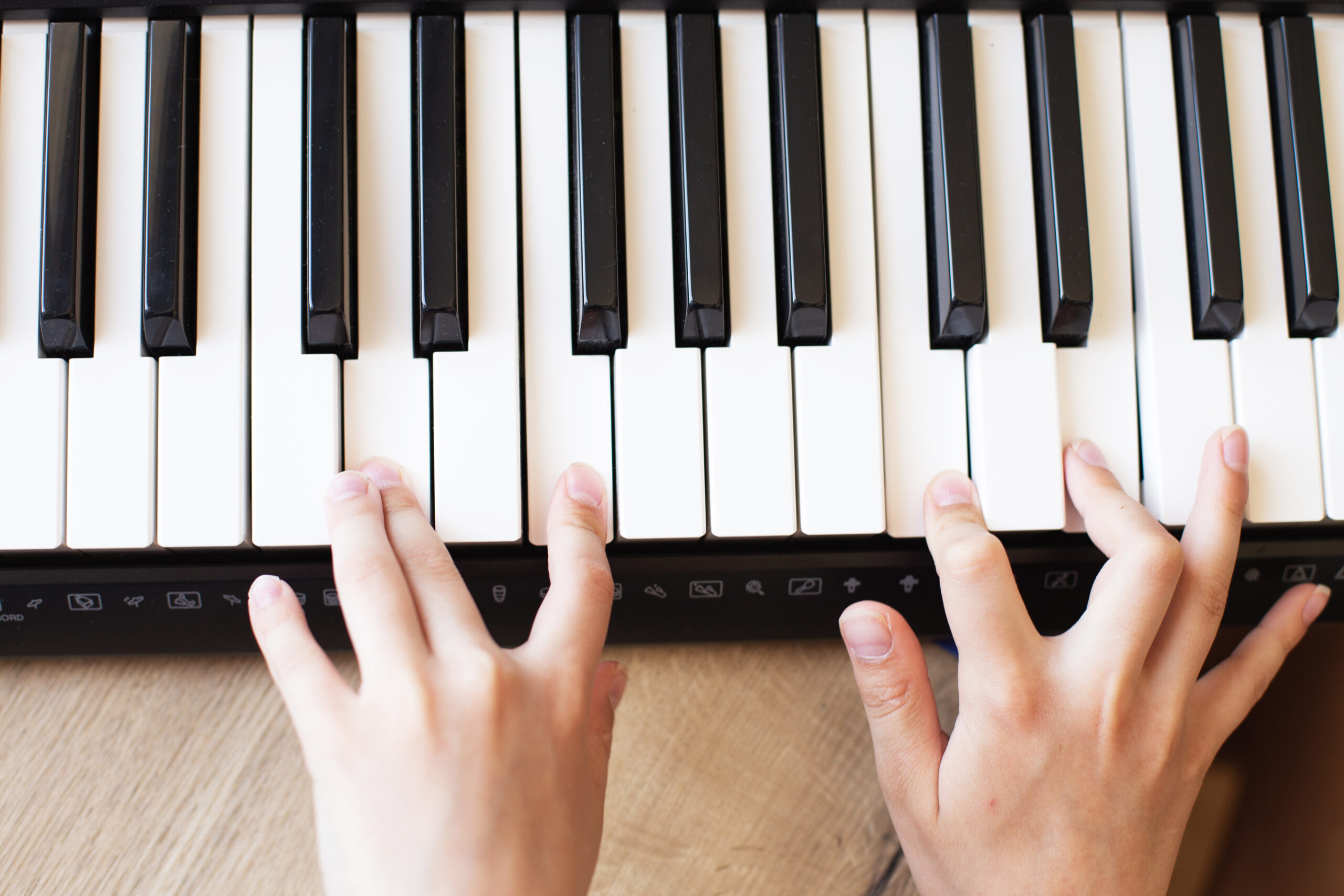
Many new players ask how long it takes to learn piano, but the real answer depends on your goals, your practice habits, and how you choose to learn. With a clear plan and consistent effort, you can play simple songs within weeks and build toward confident, musical playing over months and years.
What “learning piano” actually means
Before talking about timelines, it is important to define what “learning piano” means for you. Some people want to play a few favorite songs, while others aim to read notation fluently, improvise, or perform classical repertoire. Each of these targets has a different learning curve.
If your goal is to play basic melodies with simple chords, you can get there relatively quickly. If you want to play advanced pieces or sit in with a jazz band, you are looking at a multi‑year journey. Being honest about your destination will help you judge your progress more fairly and choose the right approach.
Typical timelines by skill level
Every learner progresses at a different pace, but there are some realistic ranges based on regular practice and decent instruction.
First month: getting familiar with the instrument
In the first few weeks, you are getting used to how the piano feels and sounds. A typical beginner at this stage learns how to sit correctly, how to place the hands on the keys, and how to produce a clear tone. You start to recognize the names of the notes on the keyboard, count basic rhythms, and play very short pieces using one hand at a time.
By the end of the first month, most learners can play simple exercises and children’s tunes, especially if they practice at least four or five days per week for 20 to 30 minutes.
Three to six months: basic songs and coordination
With three to six months of consistent practice, you can usually play with both hands together in simple pieces. You begin to read standard notation more comfortably, use basic finger patterns and scales, and keep a steady tempo. Chord progressions and simple accompaniment patterns become familiar, which opens the door to playing popular songs from lead sheets or simplified arrangements.
At this stage, many learners can sit down and play a handful of recognizable tunes, even if they are still slow and cautious. You should also start noticing better control, less tension in your hands, and a more natural connection between reading notes and pressing the right keys.
One to two years: solid intermediate playing
After one to two years of regular lessons and focused practice, most motivated students reach an early to mid‑intermediate level. This is often the point where playing starts to feel musically satisfying instead of purely mechanical. You can usually handle pieces with more complex rhythms, larger hand stretches, and some dynamic contrast.
Your reading skills improve so that you can learn new pieces more efficiently. You might begin to explore different styles such as classical, pop, blues, or simple jazz arrangements. If you enjoy playing by ear, you may find it much easier to pick out melodies and harmonies without written music.
Three to five years: advanced amateur level
With three to five years of committed study, many players reach an advanced amateur level. They can tackle longer works, handle faster tempos, and interpret music with more nuance. Technical foundations such as scales, arpeggios, and chord voicings are much more secure, which makes it possible to focus on musical expression rather than basic accuracy.
At this point, students often have a clear sense of their musical identity. Some lean toward classical repertoire, others toward contemporary, worship, jazz, or film music. Many can accompany singers, play in small ensembles, or confidently perform for friends and family.
Five years and beyond: long‑term mastery
Professional‑level playing and real artistic freedom are the result of years of accumulation rather than a short burst of effort. Even after five or ten years, serious pianists continue refining tone, phrasing, stylistic understanding, and sight‑reading. There is always more repertoire to explore and more subtlety to develop.
You do not need professional aspirations to benefit from this long‑term path. The longer you stay consistent, the more natural piano playing becomes, and the more you can treat the instrument as a way to relax, create, and express ideas without overthinking technique.
Key factors that affect how long it takes
Two people can start on the same day and be at very different levels a year later. The difference comes down to a handful of practical factors that you can control.
Your goals and musical background
Clear, realistic goals speed up learning because they guide your practice. If you decide you want to play basic pop songs in six months, your practice will naturally focus on chords, patterns, and rhythm. If you choose classical pieces as your main interest, you will spend more time on reading, phrasing, and technical drills.
Your previous musical experience also matters. Someone who has sung in choirs or played another instrument may progress faster with rhythm, pitch, and reading. Complete beginners can absolutely succeed, but they should expect to spend more time internalizing the basics.
Consistency and quality of practice
Consistency is usually more important than total hours. Practicing 20 to 30 minutes most days tends to produce better results than a single long session once a week. Regular contact with the instrument helps your brain and muscles retain patterns, which shortens the time it takes to learn pieces.
The quality of your practice matters just as much. Focused, distraction‑free sessions where you isolate tricky spots, practice slowly, and listen carefully to your sound will move you forward faster than simply playing through pieces from start to finish.
Instruction and learning method
Guided instruction, whether in‑person or online, can reduce your learning time because an experienced teacher knows how to sequence skills and prevent bad habits. A good teacher will show you efficient fingerings, suggest appropriate pieces, and correct posture and tension before they create problems.
Self‑teaching using videos and apps can work, especially at the beginning, but it usually requires more trial and error. If you choose this route, stay alert to common pitfalls like collapsing fingers, hunched shoulders, and ignoring rhythm accuracy. Building in occasional check‑ins with a teacher, even online, can help keep you on track.
Instrument access and practice environment
Having daily access to a decent acoustic piano or weighted‑key digital piano makes an enormous difference. Light, unweighted keyboards limit your ability to develop proper touch, control, and dynamic range. While they are fine for the first few months, upgrading eventually will support more serious progress.
Your practice space also influences how efficiently you learn. A quiet, comfortable spot where you can focus without interruptions allows you to get more out of each minute at the keyboard.
Age and learning style
Both children and adults can learn piano successfully; the timeline is simply different. Children may absorb patterns and motor skills more naturally but take longer to understand theory. Adults often progress faster in reading and understanding structure, even if they feel less nimble at first.
Your personal learning style also plays a role. Some people learn best by reading, others by listening and imitation. Recognizing how you learn most efficiently lets you choose materials and approaches that accelerate your progress.
How to structure your learning for faster progress
Regardless of your starting point, a simple, balanced structure helps you learn piano more efficiently. Instead of guessing what to practice, divide your time into a few focused areas so each session builds a complete skill set.
Build a consistent practice routine
Choose a realistic schedule that fits your life. For many adults, 20 to 40 minutes, four to six days per week, is a practical target that supports steady improvement. For children, shorter, more frequent sessions tend to work better than occasional long ones.
Within each session, you can loosely break your time into three parts: a short warm‑up to wake up your hands and ears, focused work on one or two pieces, and a few minutes of something fun that reinforces skills, such as improvising on a simple pattern or revisiting an old favorite.
Balance technique and musical pieces
Technical work such as scales, broken chords, or finger exercises helps you develop control, evenness, and strength. However, technical drills should support your repertoire, not replace it. Ideally, the patterns you practice show up directly in the pieces you are learning, which lets you see the practical benefit of that work.
When choosing pieces, stay just slightly outside your comfort zone. If a piece is so hard that you cannot play any part of it correctly at a slow tempo, it will likely slow your progress and frustrate you. Slightly challenging pieces, learned thoroughly, will grow your skills faster.
Use slow, deliberate practice
One of the most effective ways to shorten the overall learning timeline is to practice slowly and accurately, especially in the early stages of a new piece. Fast but sloppy repetition simply teaches mistakes. Slow, deliberate playing allows your hands and brain to map the correct motions and sounds from the start.
Working in small fragments is also helpful. Instead of struggling through an entire page, spend a few minutes perfecting a single bar or phrase. Once that feels solid, connect it to the next one. This approach may feel slow in the moment, but it often leads to faster overall progress.
Track progress and adjust goals
Keeping a simple practice log or recording occasional videos of your playing can make improvement more visible. It is easy to forget how far you have come when you are focused on present difficulties. Comparing recordings from a few months apart often shows clear gains in control, speed, and musicality.
If you notice that you are consistently stuck on similar problems, such as rhythm or hand coordination, bring those issues to a teacher or focus some of your practice time on targeted exercises. Small, specific adjustments are more effective than vague resolutions to “try harder.”
Setting realistic expectations for your timeline
Understanding typical milestones can help you set expectations and stay motivated. These are rough guides, not strict rules, but they offer a reference for what many learners experience with regular practice and guidance.
Within the first few months, expect to recognize the keyboard layout, read simple notes, and play short tunes slowly. By around one year, you should be able to handle basic songs hands together and feel more comfortable reading. Between one and three years, you can reasonably aim for intermediate pieces, more expressive playing, and the ability to learn new material without starting from zero each time.
If your progress feels slower than this, it does not mean you are not capable. It often signals gaps in practice consistency, unclear goals, or a need for better instruction. Small changes in these areas can noticeably shorten how long it takes to learn each new skill or piece.
Practical steps to start learning effectively
To make your learning timeline as efficient and enjoyable as possible, it helps to start with a few concrete decisions. Choose whether you will work with a teacher, use a structured online course, or combine both. Plan a weekly practice schedule that you can realistically keep for at least a few months. Set short‑term goals, such as learning a specific piece or mastering a particular scale, and tie them to a time frame.
Make sure your instrument and setup support good habits from the beginning. A properly adjusted bench height, enough lighting, and a stable piano or digital keyboard with full‑size keys all reduce physical strain and allow you to focus on the music. Finally, remind yourself that piano is a long‑term skill. Instead of fixating on how many months or years it will take to “learn piano,” focus on building a routine that lets you improve steadily. With that approach, you will often find that you reach your goals sooner than you expect.